Guides
Tailoring shop software: naap, bookings and karigar payments
How software replaces the register, the loose naap slips and the end-of-month argument over karigar payments.
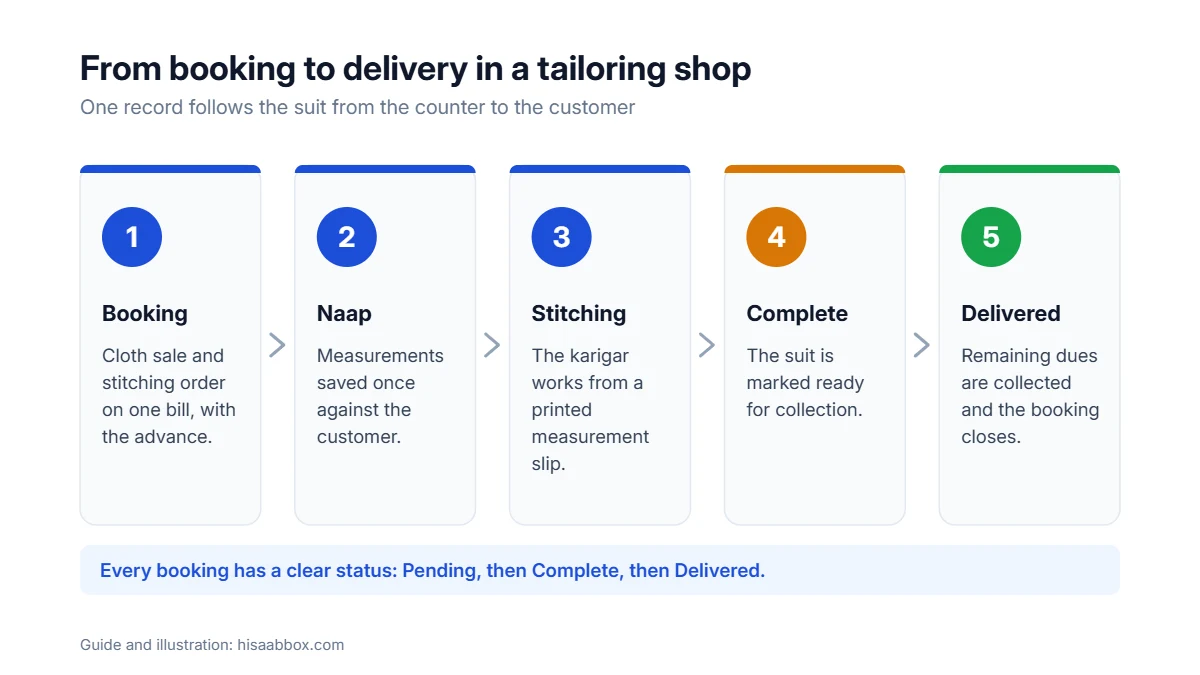
Two weeks before Eid, a tailoring shop runs on three things: a register full of naap (measurements), a pile of slips pinned to cloth, and the owner's memory of who has paid what. When one slip goes missing, a suit is stitched to the wrong size and a customer is lost. Tailoring software exists to remove that risk.
Naap saved once, used every time
Each customer's measurements should be saved against their name and phone number. On the next visit the cashier searches, confirms and books. The naap slip is printed for the workshop, in Urdu if the karigar (tailor) reads Urdu, so nothing is copied by hand.
Bookings with a clear status
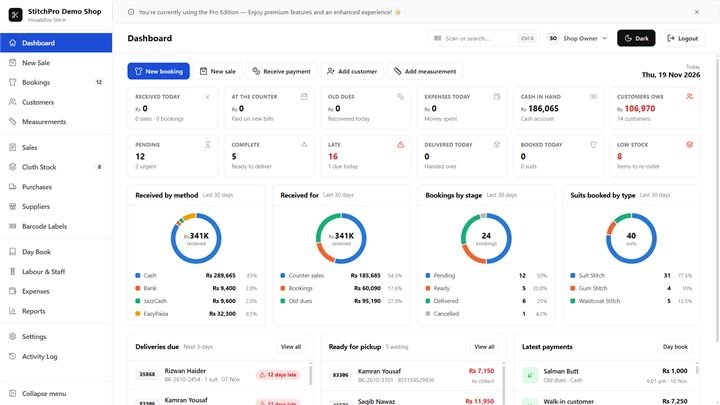
Every stitching order should move through simple stages: pending, complete, delivered. The owner should see at a glance how many suits are pending and which are due tomorrow. Cancelling a booking should need the owner's PIN.
Advances and dues
Customers pay in pieces: some at booking, some at delivery, some later. The system must record every payment against the booking and always show the balance. A discount at delivery should reduce the bill properly, not be scribbled on the slip.
Cloth and stitching together
Many shops sell cloth and stitch it too. When a customer buys cloth and orders stitching in one visit, the cloth should leave stock immediately while the stitching becomes a booking. Good software handles both at the same counter and gives a receipt for each.
Paying the karigar
Tailors are usually paid per suit. The fair way is to count the naap slips each karigar brings back. If every slip carries a barcode, it can be scanned once and paid once, and no slip is ever paid twice. Fixed-salary staff, advances and signed payment slips belong in the same place.
A quick checklist
- Measurements saved per customer and printed for the workshop
- Booking board with pending, complete and delivered
- Advances, part payments and dues on every booking
- Cloth stock with barcode labels
- Karigar payments counted from slips
- Owner PIN for cancellations and discounts
What to do next
StitchPro, our software for cloth and tailoring shops, was built around exactly these points. You can see it in our work, and ask for a demo account to try a full demo shop. If you are comparing options, our guide on POS software vs billing software explains why a tailor needs a bit of both.
More guides

Zubair Aslam builds the POS, billing and inventory software shown on this site. Get in touch